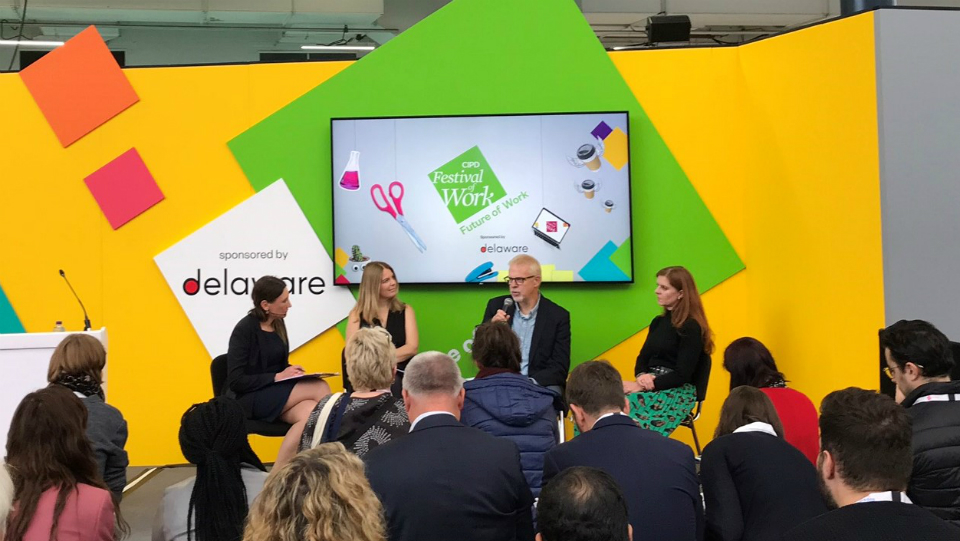
This year’s Festival of Work was buzzing. From flashmobs and popcorn, to pets at work and cuddly armadillos, the future of work is set to be a new dawn for employee engagement.
We are already seeing swathes of technology enhance the way HR teams cleverly manage their HR processes. Applications such as smart applicant tracking systems now feed into attractive online onboarding programmes; automated pulse surveys measure real-time engagement, and the use of social media and gamification generate organisational energy and remove the boredom from routine tasks.
During the Cascade HR Software panel discussion, we explored the tools senior management teams anticipate future generations will use to process HR transactions smoothly. New technologies will add value to every stage of the employee life cycle. From apps to ensure job adverts and interview processes are without bias, to virtual reality headsets that allow managers to experience situations from other people’s perspectives. All these tools help evolve emotional intelligence to prepare for otherwise challenging workplace interactions.
The nine-to-five, office-based work culture will die. In its place will be new psychological contracts with employees to create interesting jobs that can be done at a time and place to suit their work-life balance. In exchange, this will unleash their human creativity and innovation to solve problems and create value machines simply cannot do. All this will be underpinned by frictionless, multi-dimensional, global communication tools; new techniques to manage remote workers, and a genuinely accepted belief that differing perspectives, whether generational or cultural, are to be embraced.
At the top of the agenda will be emotional wellbeing, as new generations insist the relentless pursuit of economic growth will not deliver the happiness they desire and need. Creating workplaces where employees feel less stressed, more trusted and highly valued will be top of every HR director’s agenda. They know this will help attract the right employees, trigger their innovation and ensure they stay longer term. While AI and advanced technologies will play a huge part in this, their role will be simply to make the workplace more human, not less.
Stephanie Kelly is chief people officer at IRIS Software Group