
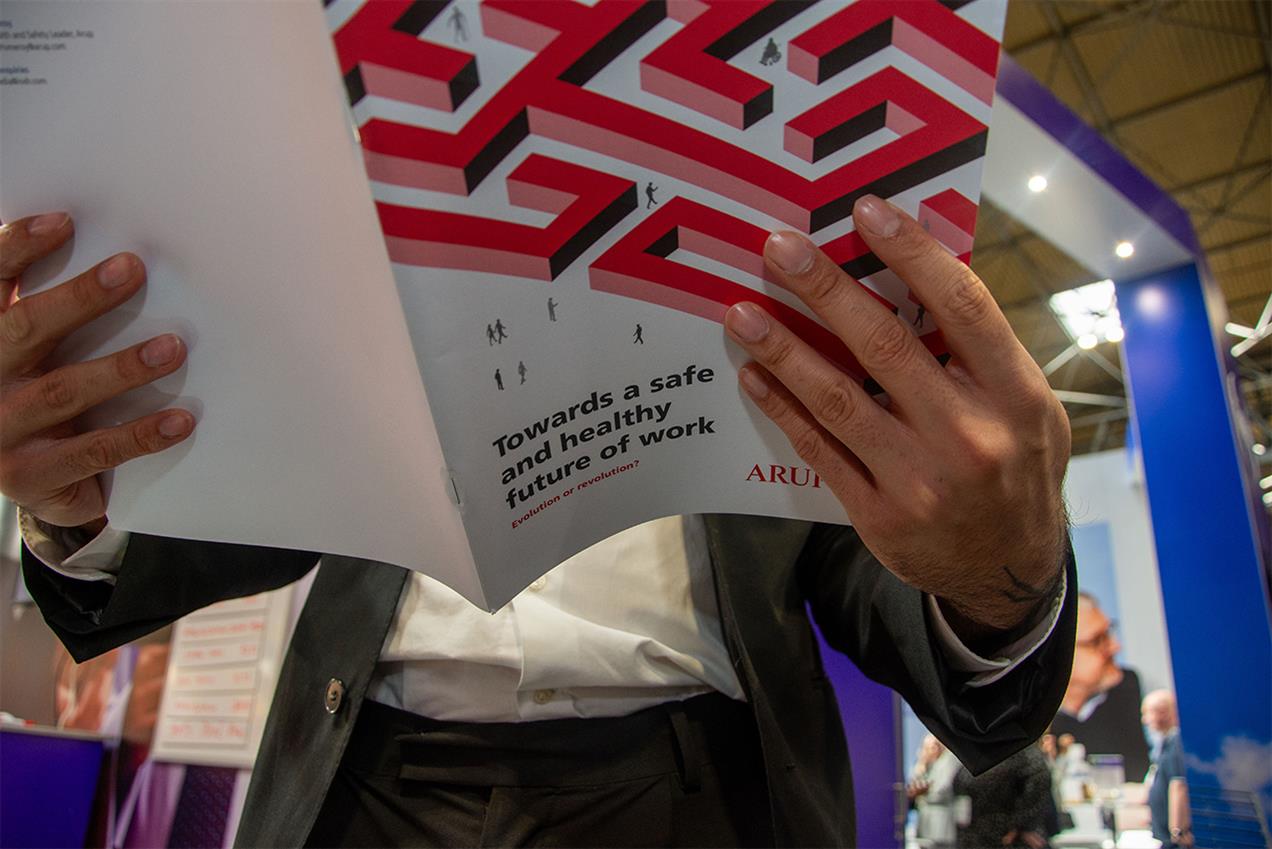
With an estimated 7,500 people dying every day worldwide from unsafe or unhealthy working conditions, action is required. Towards a Safe and Healthy Future of Work explores how the world of work is set to evolve in the coming years and poses questions designed to highlight to governments, businesses and the health and safety profession how to ensure people are protected in and out of work.
Delivered by the Institution of Occupational Safety and Health (IOSH), the chartered body for health and safety professionals, and sustainable development experts Arup, the report recognises that new technologies and increased digitalisation are transforming workplaces, bringing with it opportunities to improve health and safety standards.
However, there is uncertainty about the use of new technologies. Will they create physical safety risks? Do monitoring devices cause wellbeing issues? Can they generate privacy issues?
With these and more risks in mind, the report makes a number of calls to action, including for:
- Governments to ratify the International Labour Organization conventions relating to health and safety and to review and update regulations to ensure health and safety risks are addressed.
- Businesses to support sustainable development and the United Nations Sustainable Development Goals, to identify and address existing and emerging health and safety risks, and to including health and safety management into organisational strategies.
Ruth Wilkinson CMIOSH, head of policy and public affairs at IOSH, said:
“What is clear is that we need to work together as a profession with governments, businesses and other professions to manage the changes to work carefully, to implement new technologies sensibly and, crucially, to ensure that people can go home from work safe and well every day.” James Pomeroy CMIOSH, global health and safety leader at Arup, said:
“This is a transformational point in time for our industry. The report offers landmark guidance regarding how we can better navigate the landscape we operate in, prioritising risk mitigation by further integrating technologies. It has been a privilege to be part of such hugely important research that can serve to be fundamental in accelerating the use of digitalisation in the space.”